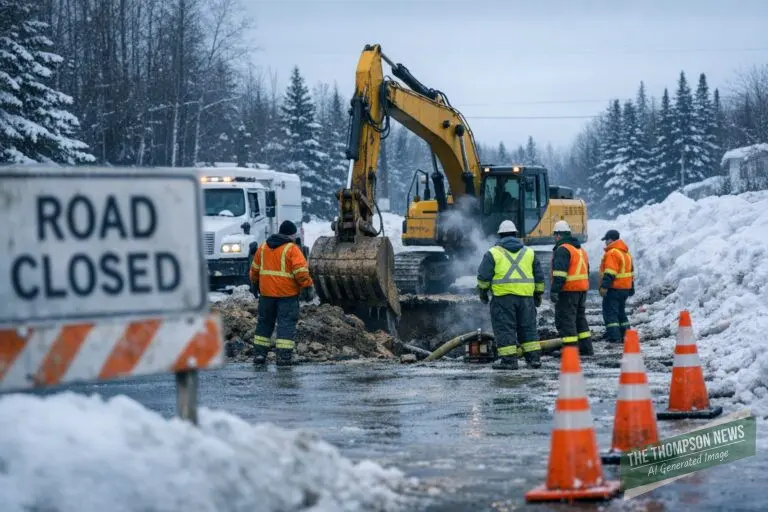
Manitoba Government’s Mineral Development Fund to Support Northern Mining, Potential Impact on Thompson Hunting Areas - AI Generated Image
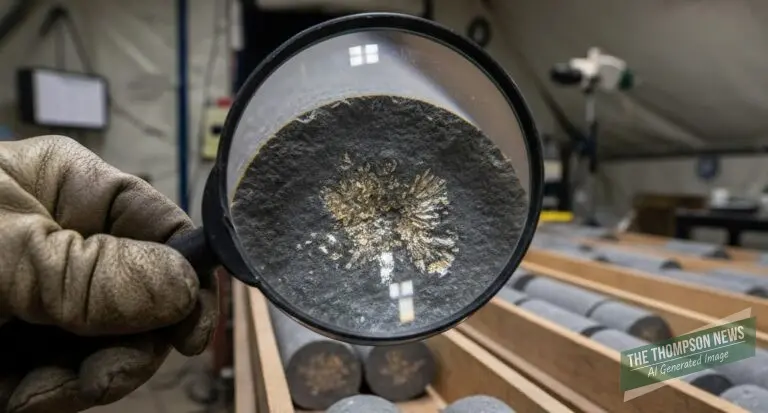
The Manitoba government has announced a $1 million investment from the Mineral Development Fund to conduct a feasibility study on northern infrastructure needs. The initiative aims to identify and plan for new transportation, utility, and communication infrastructure that would support future mining projects across the north, including the Thompson region.
The study, carried out in partnership with the Canada Infrastructure Bank, will assess what’s needed to make remote mineral deposits more accessible. Manitoba’s Business, Mining, Trade and Job Creation Minister Jamie Moses said the goal is to attract investment and create employment in northern communities, describing the initiative as a step toward establishing the province as a leader in critical mineral production.
While the investment is being welcomed for its potential to strengthen northern economies, it also raises concerns among environmental groups and hunters about how expanding mining access could affect wildlife habitats and traditional land use. The Thompson area, surrounded by boreal forest and popular for hunting and trapping, may see increased pressure if new access roads and exploration zones open nearby.
Wildlife experts and Indigenous communities have cautioned that new mining-related infrastructure can fragment habitats, alter migration routes, and increase predation risks for moose and caribou populations. The province has stated that mining exploration is permitted in most Wildlife Management Areas as “multiple-use lands,” though existing Indigenous and treaty rights remain protected.
Manitoba holds 30 of Canada’s 34 listed critical minerals, including nickel, copper, and cobalt—resources already mined or explored near Thompson. As the province looks to expand its role in the global energy transition, balancing economic growth with environmental protection and respect for traditional northern land use will be a key challenge in the years ahead.

Emma specializes in municipal politics, community development, and the social issues shaping Thompson. She is dedicated to transparent, balanced reporting that keeps the community informed.
Contact her at emma@thethompsonnews.ca.